"The exhibition by Virág Benkovics and Zita Matulányi-Szabó focuses on the story of a crime of passion, inspired by Nick Cave and the Bad Seeds and Kylie Minogue's song "Where the Wild Roses Grow."
In criminology, such crimes are committed in a sudden, intense burst of emotion, such as rage or jealousy. Yet in art, we see the complete romanticization of murder.
Drawing on pop culture, romantic gothicism, and timeless classic stories, the exhibition explores the fine line between love, passion, and violence. Examples include vampire stories, in which lust and death go hand in hand against a backdrop of otherworldly beauty. The Italian horror film Dellamorte Dellamore depicts the intertwining of love and death through the phenomenon of necrophilia. Oscar Wilde's The Picture of Dorian Gray portrays the conflict between eternal beauty and moral corruption.
The central image is the rose, which symbolises life, beauty, transience and the tragedy of violence. In the title song, the girl is nicknamed 'Wild Rose' — embodying freedom, unfulfilled love, lost innocence and secret desires — and her killer leaves her body amongst roses. In Dellamorte Dellamore, the rose appears several times during the protagonist's romantic encounters with a deceased woman. It should also be noted that death is predetermined in these stories; both parties know and accept that the rose must die.
But what if the rose were indestructible and had made itself immortal? What if we reverse these seemingly set-in-stone stories, where the grave is cold and the rose is fleeting?
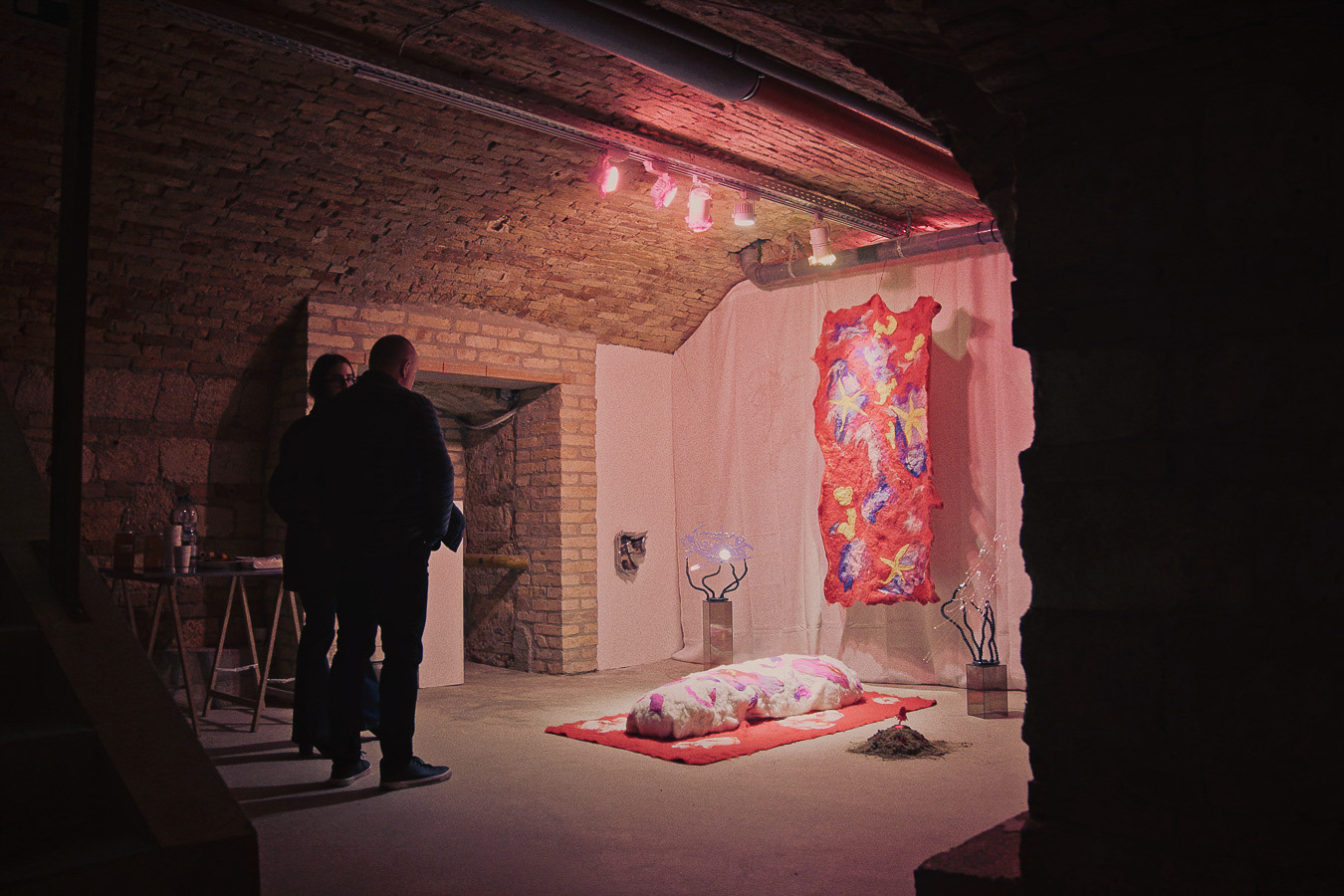
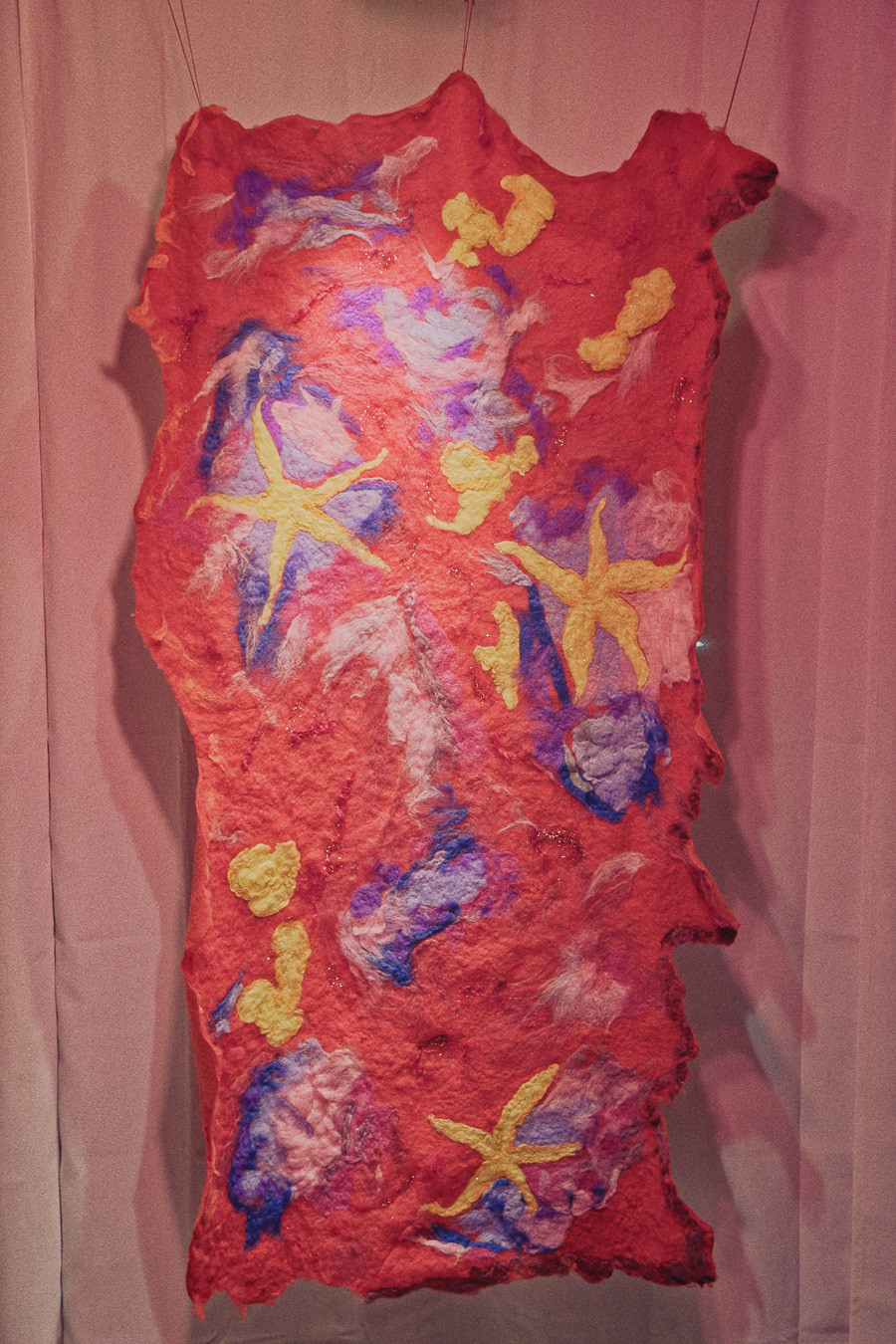
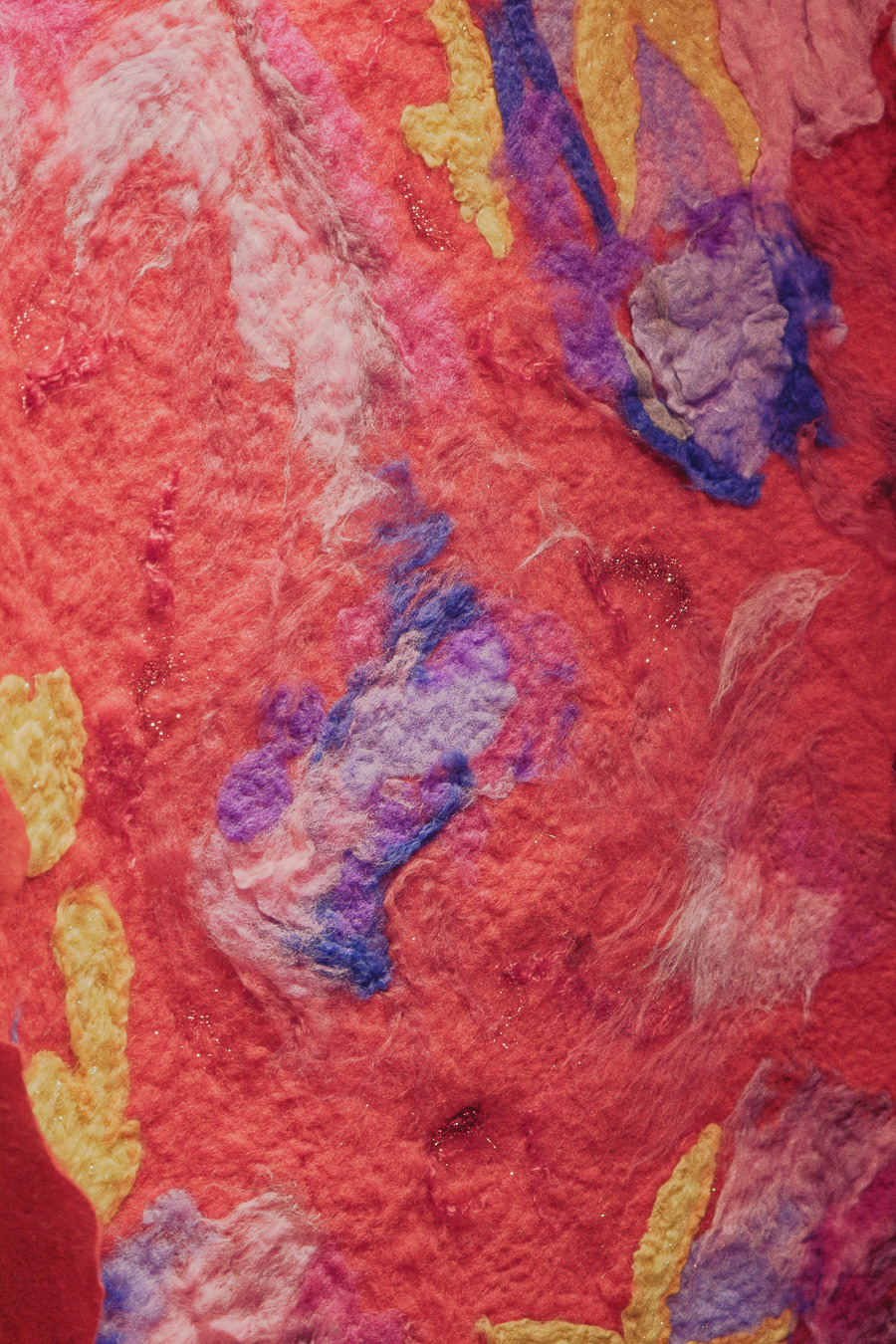
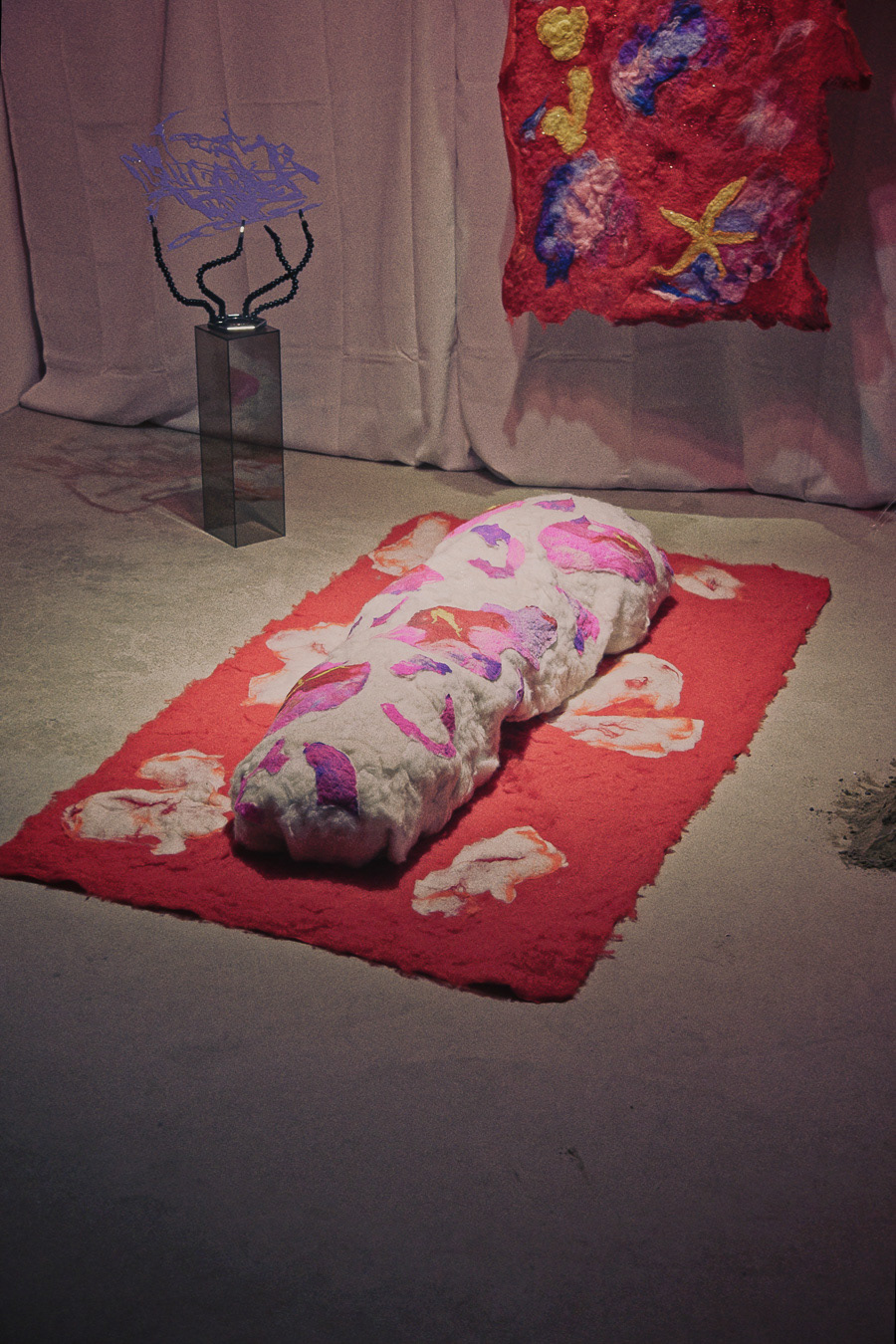
The answers to these questions await us at the ISBN+ Gallery, where Virág Benkovics's plexiglass flowers and Zita Matulányi-Szabó's felt installations fill the space, creating a sanctuary-like ambience that explores the relationship between death and beauty."
Text: Ágnes Keszegh
In criminology, such crimes are committed in a sudden, intense burst of emotion, such as rage or jealousy. Yet in art, we see the complete romanticization of murder.
Drawing on pop culture, romantic gothicism, and timeless classic stories, the exhibition explores the fine line between love, passion, and violence. Examples include vampire stories, in which lust and death go hand in hand against a backdrop of otherworldly beauty. The Italian horror film Dellamorte Dellamore depicts the intertwining of love and death through the phenomenon of necrophilia. Oscar Wilde's The Picture of Dorian Gray portrays the conflict between eternal beauty and moral corruption.
The central image is the rose, which symbolises life, beauty, transience and the tragedy of violence. In the title song, the girl is nicknamed 'Wild Rose' — embodying freedom, unfulfilled love, lost innocence and secret desires — and her killer leaves her body amongst roses. In Dellamorte Dellamore, the rose appears several times during the protagonist's romantic encounters with a deceased woman. It should also be noted that death is predetermined in these stories; both parties know and accept that the rose must die.
But what if the rose were indestructible and had made itself immortal? What if we reverse these seemingly set-in-stone stories, where the grave is cold and the rose is fleeting?
The answers to these questions await us at the ISBN+ Gallery, where Virág Benkovics's plexiglass flowers and Zita Matulányi-Szabó's felt installations fill the space, creating a sanctuary-like ambience that explores the relationship between death and beauty."
Text: Ágnes Keszegh

pictures: Tamás Pec