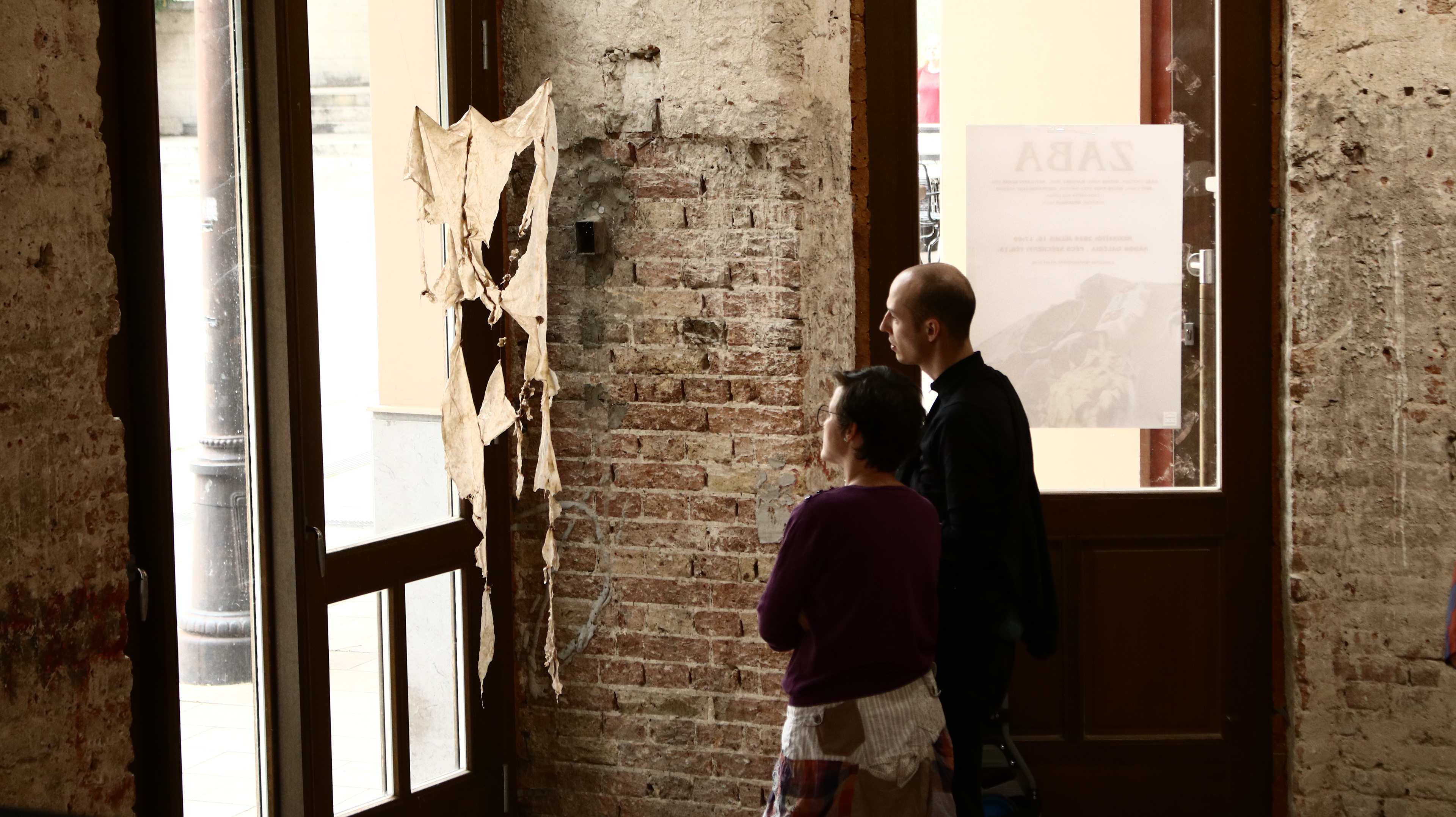
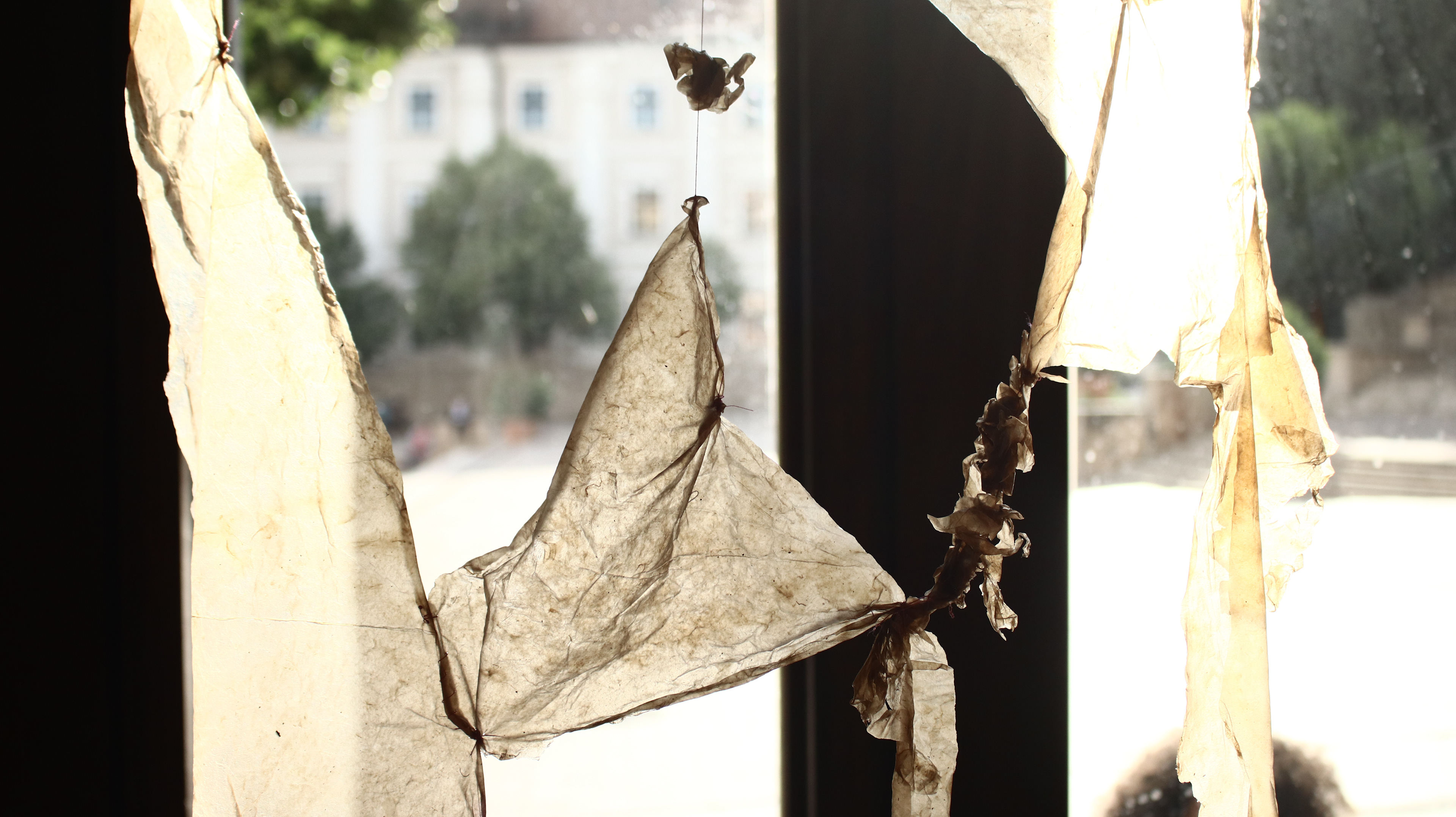
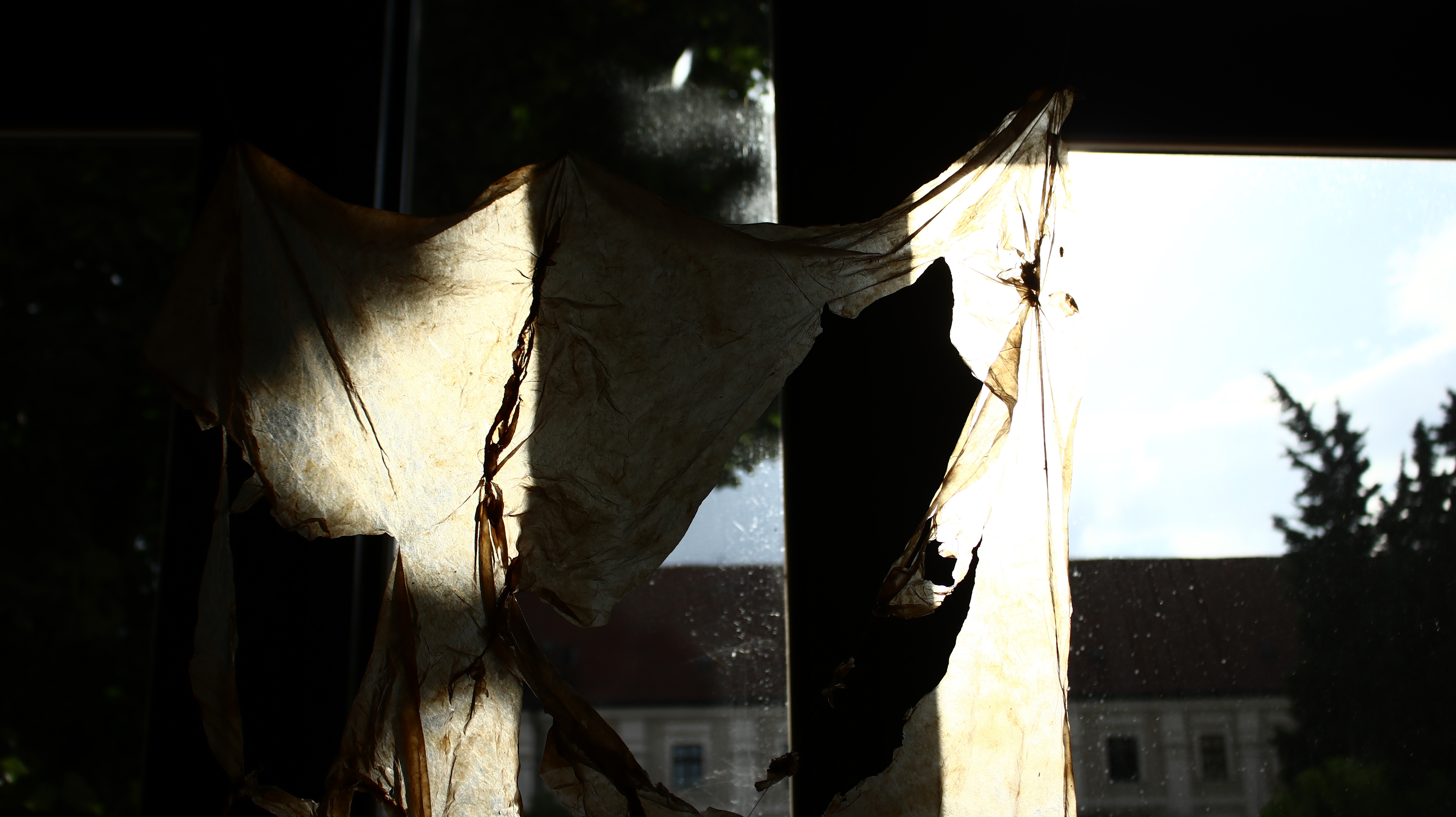
Leather-like bioplastic. The surface is shaped by the fermented cell network of the kombucha culture, evoking body, wound, and healing through its fragility and delicacy.
The work has deeply personal roots: as a child, the artist wanted to cook, but was discouraged by those around her – “you’ll just ruin it” – which profoundly shaped her relationship with food. This was later further complicated by eating-related illnesses. The fermentation process and the care of the kombucha cultures – which produce a drink that supports her digestion and overall health – offered her a new, intimate way of connecting. She calls her cultures “Lukrécia,” tending to them every day with attention and care. Through this process, she was able to regain her faith in her ability to sustain life, nurture, and create. The former feeling of guilt was replaced by the experience of preparing nourishment in a process she enjoys, rewriting the negative patterns once tied to cooking.
The work has deeply personal roots: as a child, the artist wanted to cook, but was discouraged by those around her – “you’ll just ruin it” – which profoundly shaped her relationship with food. This was later further complicated by eating-related illnesses. The fermentation process and the care of the kombucha cultures – which produce a drink that supports her digestion and overall health – offered her a new, intimate way of connecting. She calls her cultures “Lukrécia,” tending to them every day with attention and care. Through this process, she was able to regain her faith in her ability to sustain life, nurture, and create. The former feeling of guilt was replaced by the experience of preparing nourishment in a process she enjoys, rewriting the negative patterns once tied to cooking.