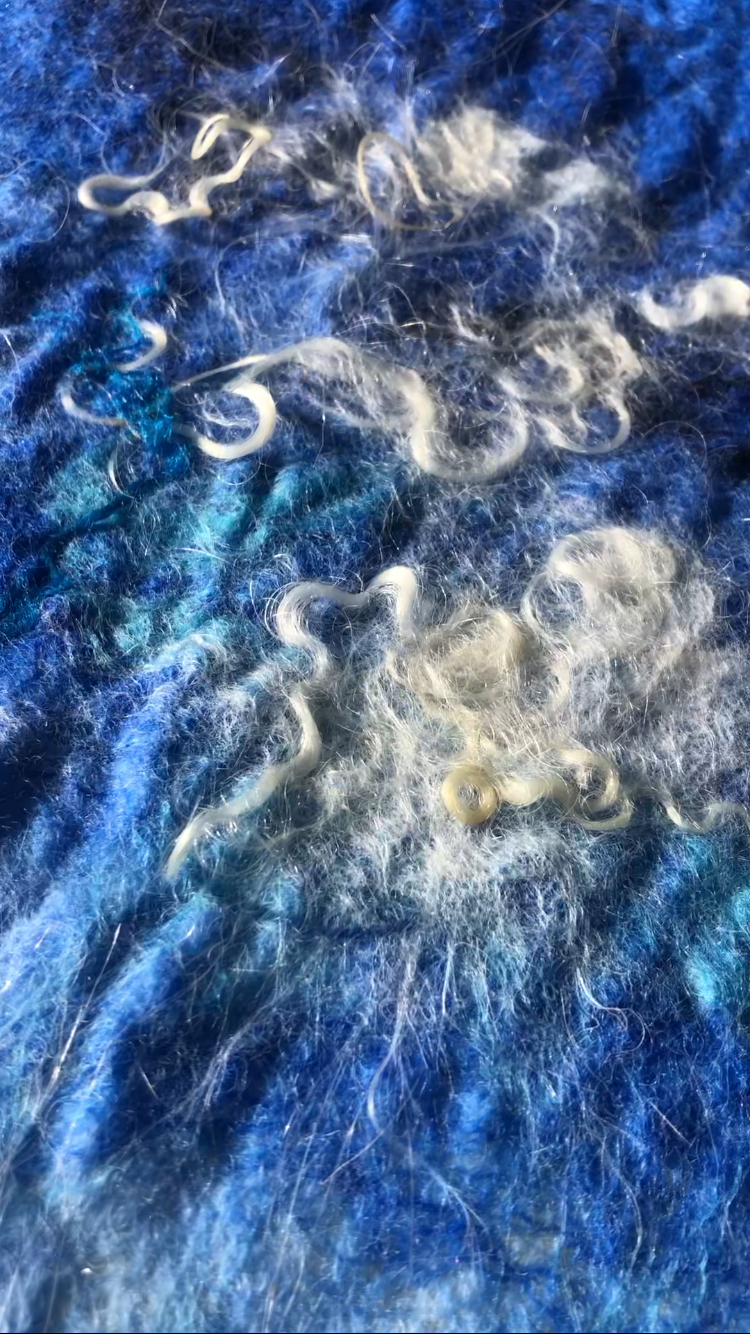
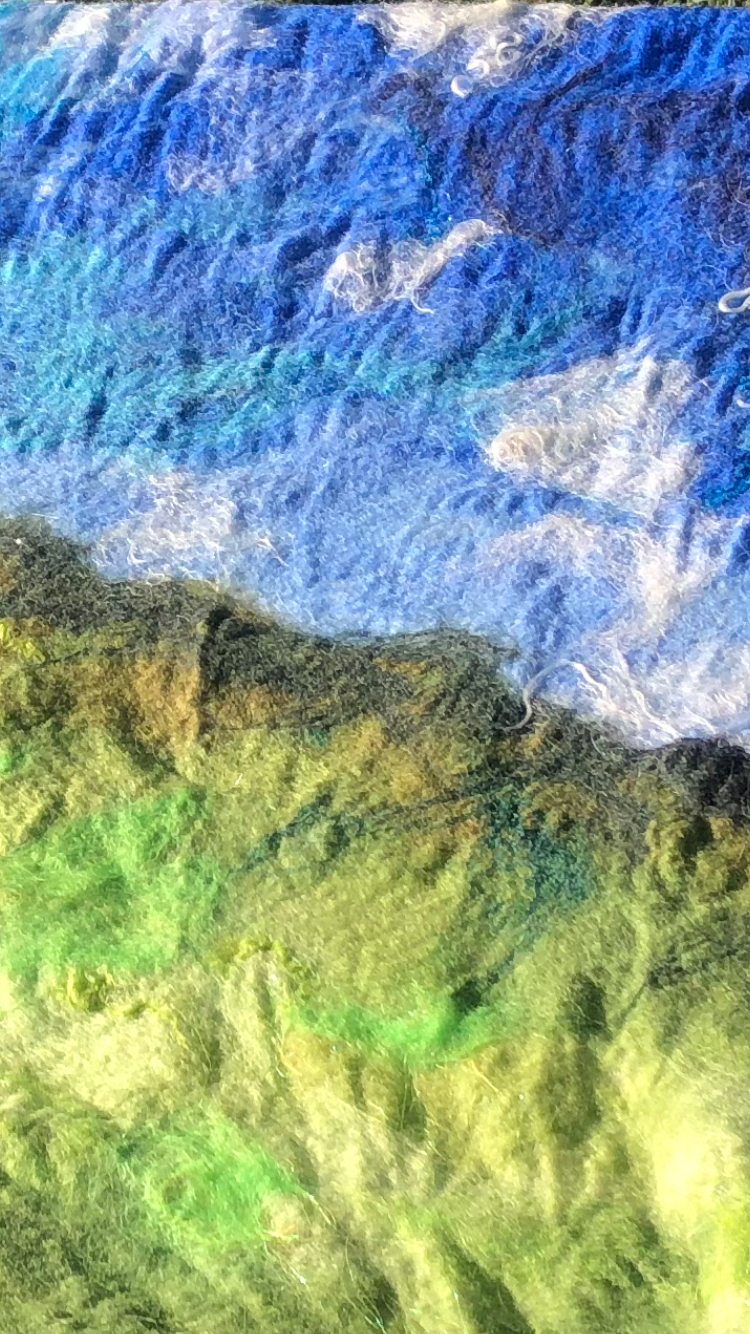
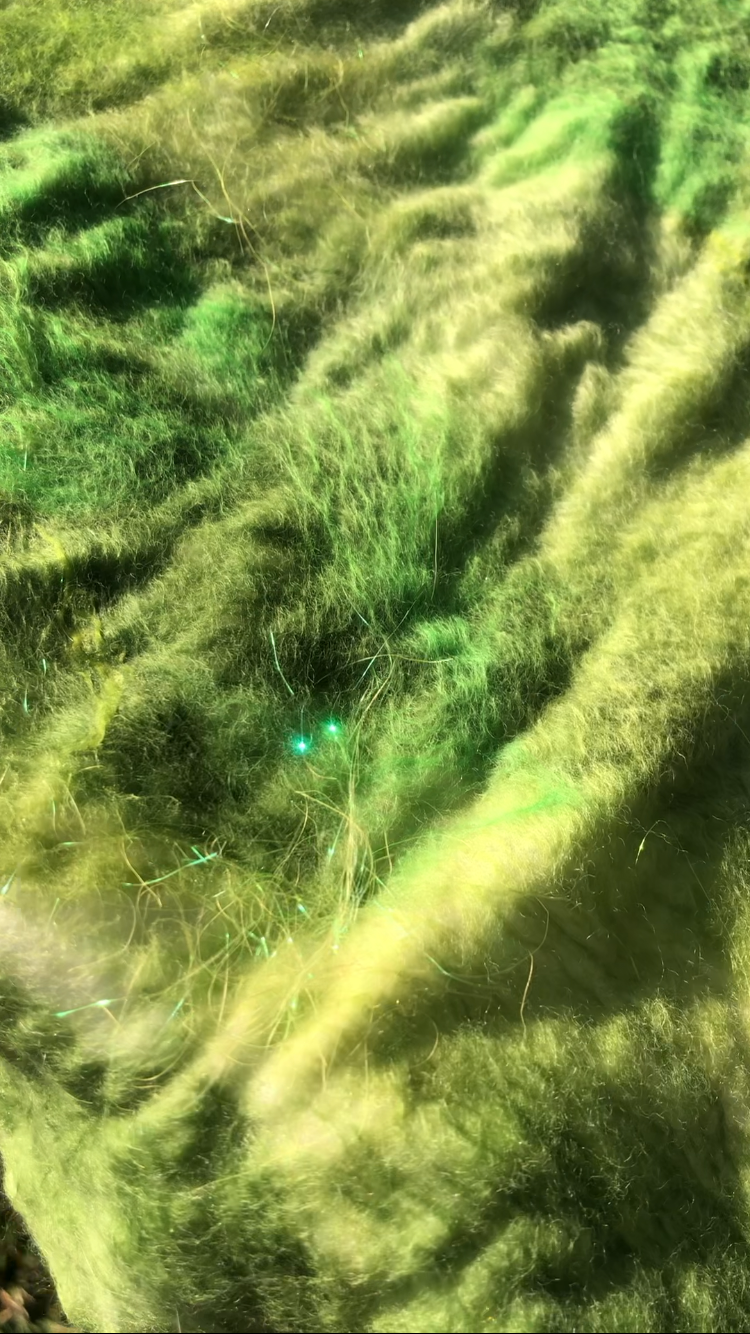
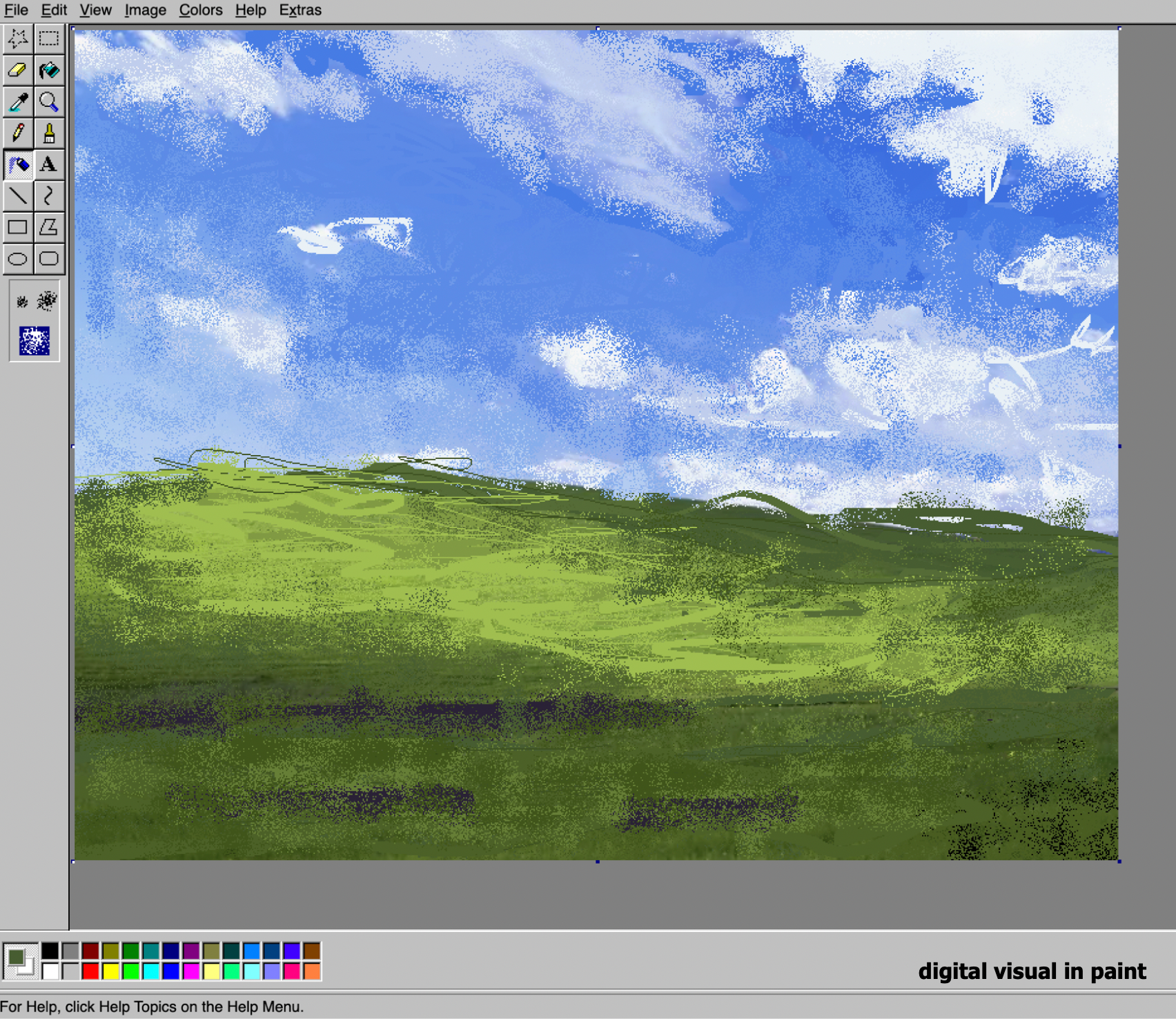
“Lanka” is a reinterpretation of an iconic digital visual through an ancient, hand-formed technique. The work bridges the gap between artificial and organic worlds, pixels and wool threads, collective memory and personal past. How does an image transform from light to material? What does it mean to recreate something we have never seen in reality, yet we all know?
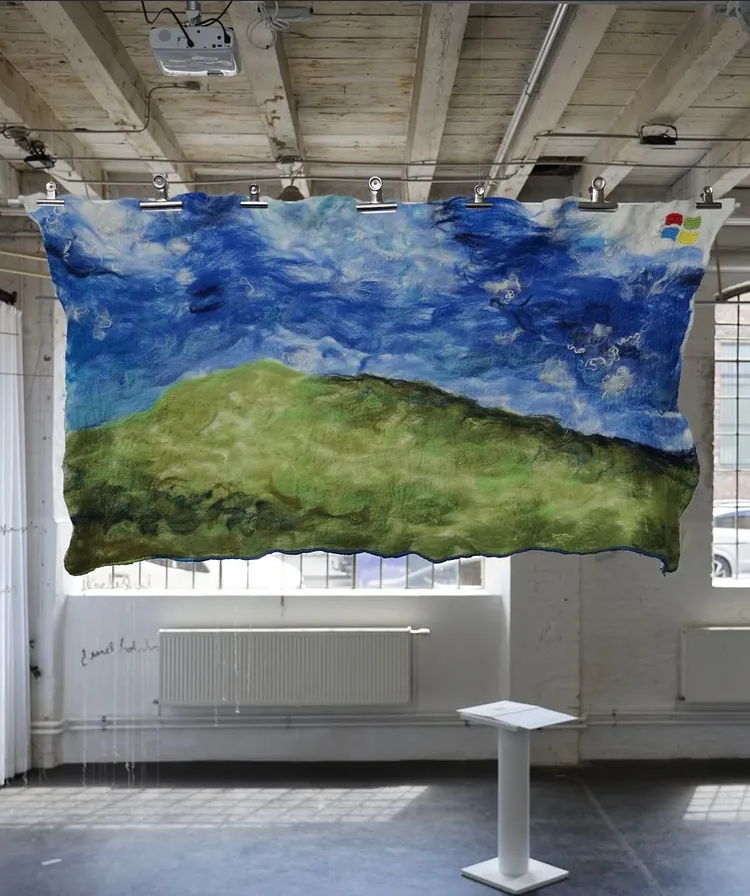
natural fibre – synthetic fibre – digital fibre, exhibition, g.o.l.f. klub, Vienna
At the centre of the installation is the iconic Windows XP background image - a photo known as “Lanka” (made by: Charles O’Rear), which depicts a real-life California landscape, yet is so embedded in our digital culture that many believe it to be artificial. The rights to the image were purchased by Microsoft in 2000, and at almost the same time - in 2001 - I was born. In the digital world, there are countless images that we never see in print, that never exist in substance: wallpapers, screensavers, stock photos that we store in our visual memory but never actually encounter as physical objects. For many, this image symbolises the beginning of the digital world; for my generation, it has become the opening image of the digital world: a universal, silent background.
In my work, I recreate this emblematic image at 200 cm × 100 cm using a wet felting technique. This process is a kind of aesthetic liberation for me.
My aim is not only to reconstruct the image, but also to radically reimagine it. What happens when an image woven from light is not shown on a screen but through woolen threads? What new physical experience does a visual memory give us if it can be perceived by our fingers? And what does it tell us about the transience of digital images if we try to enclose them in material?
My aim is not only to reconstruct the image, but also to radically reimagine it. What happens when an image woven from light is not shown on a screen but through woolen threads? What new physical experience does a visual memory give us if it can be perceived by our fingers? And what does it tell us about the transience of digital images if we try to enclose them in material?