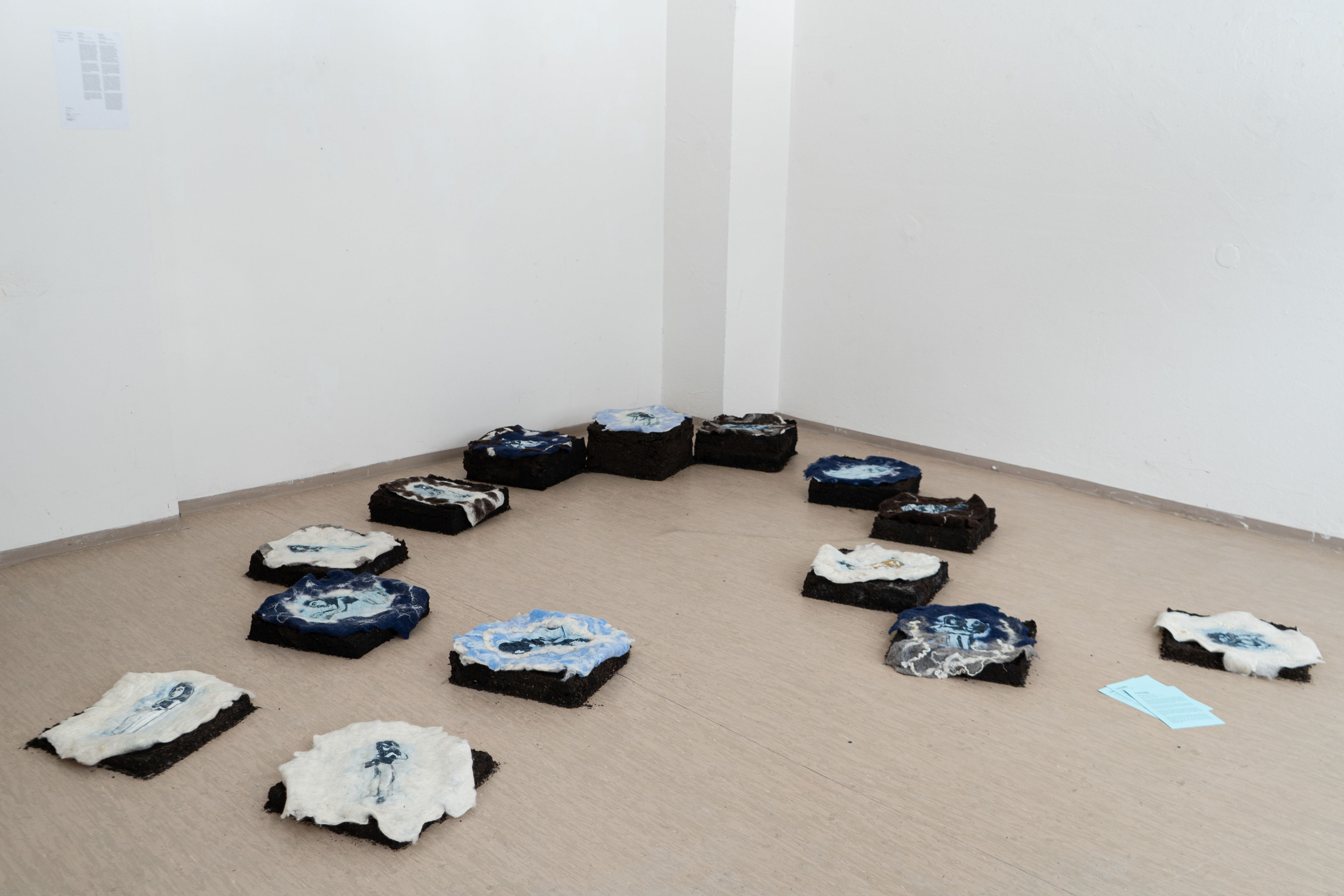
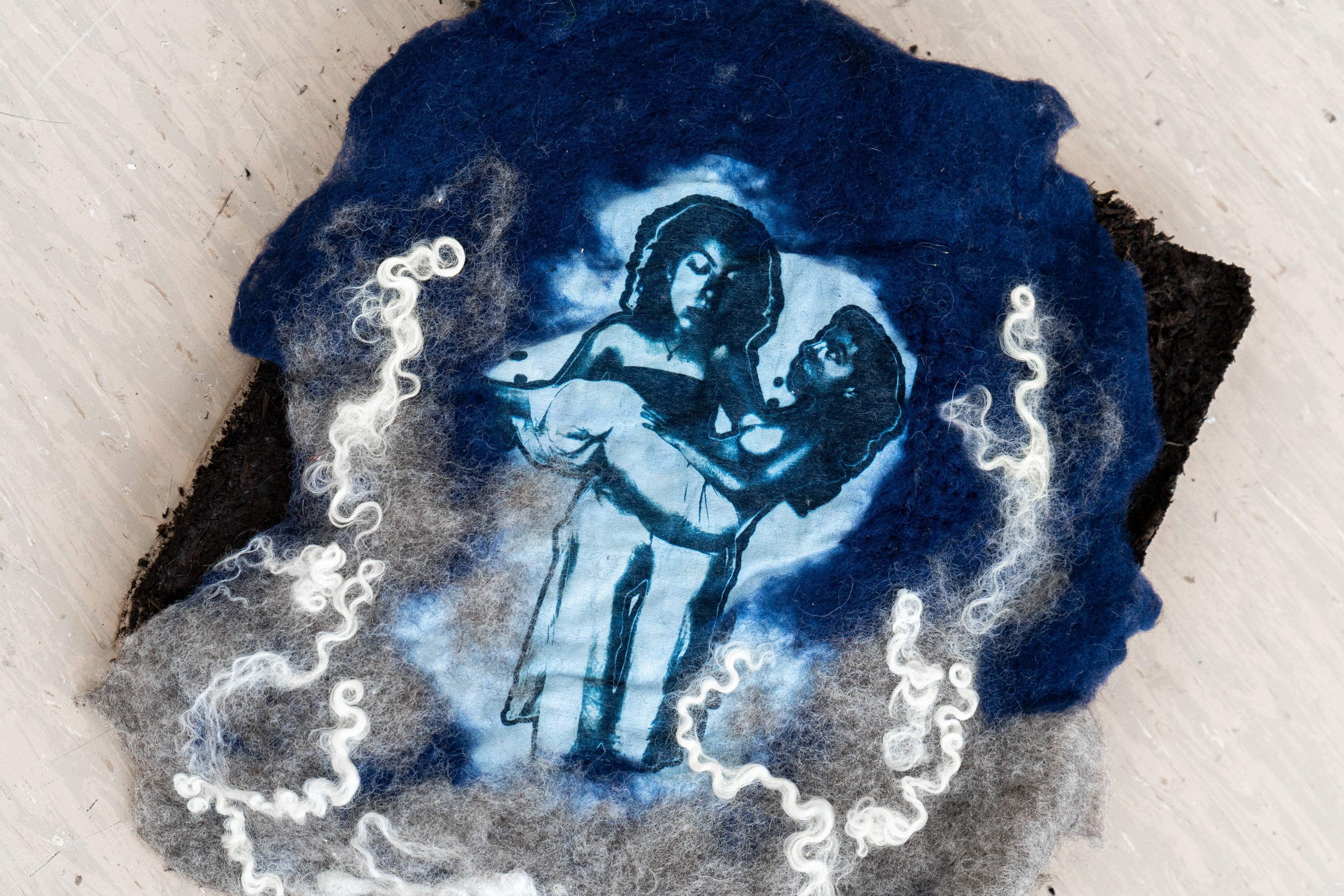
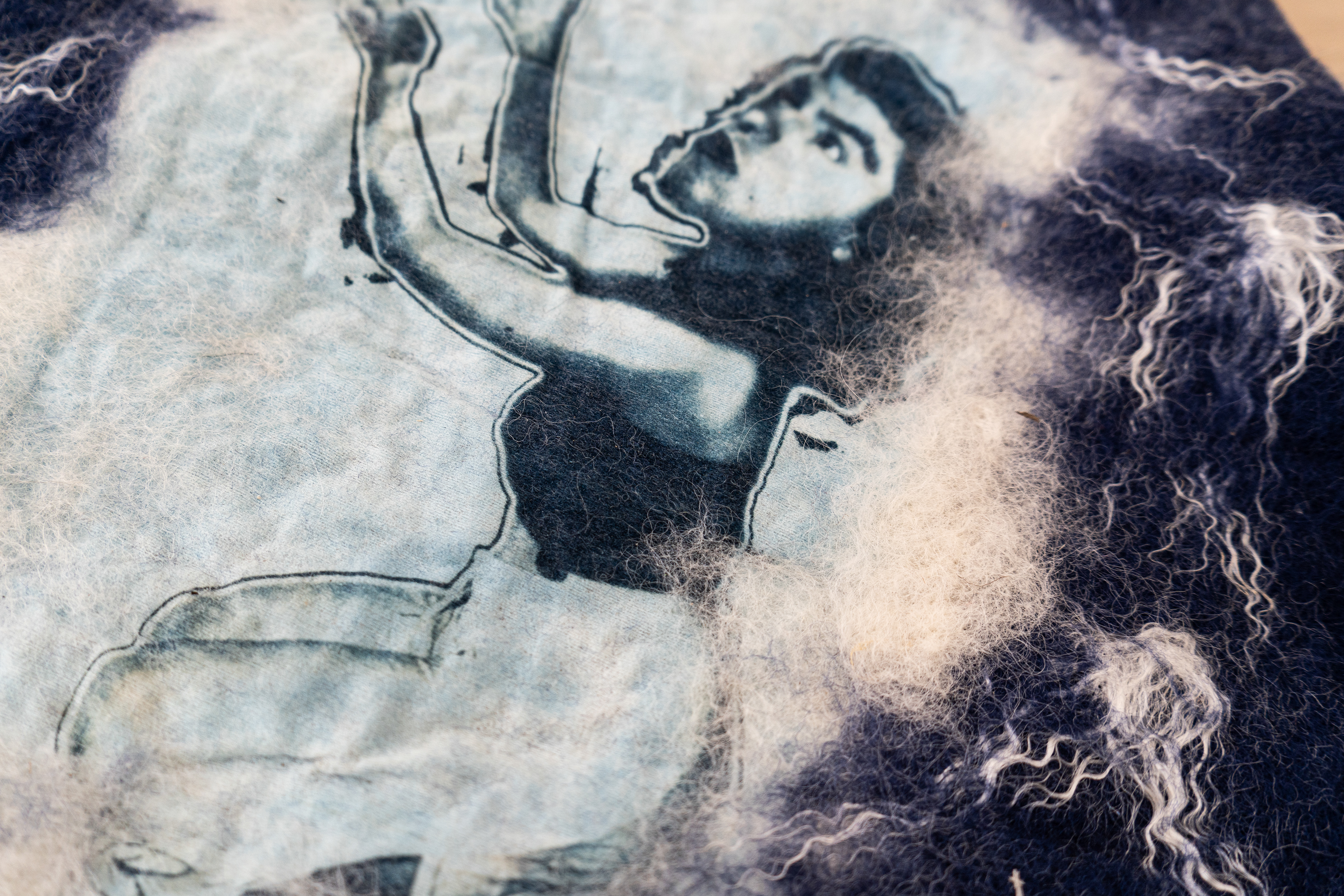
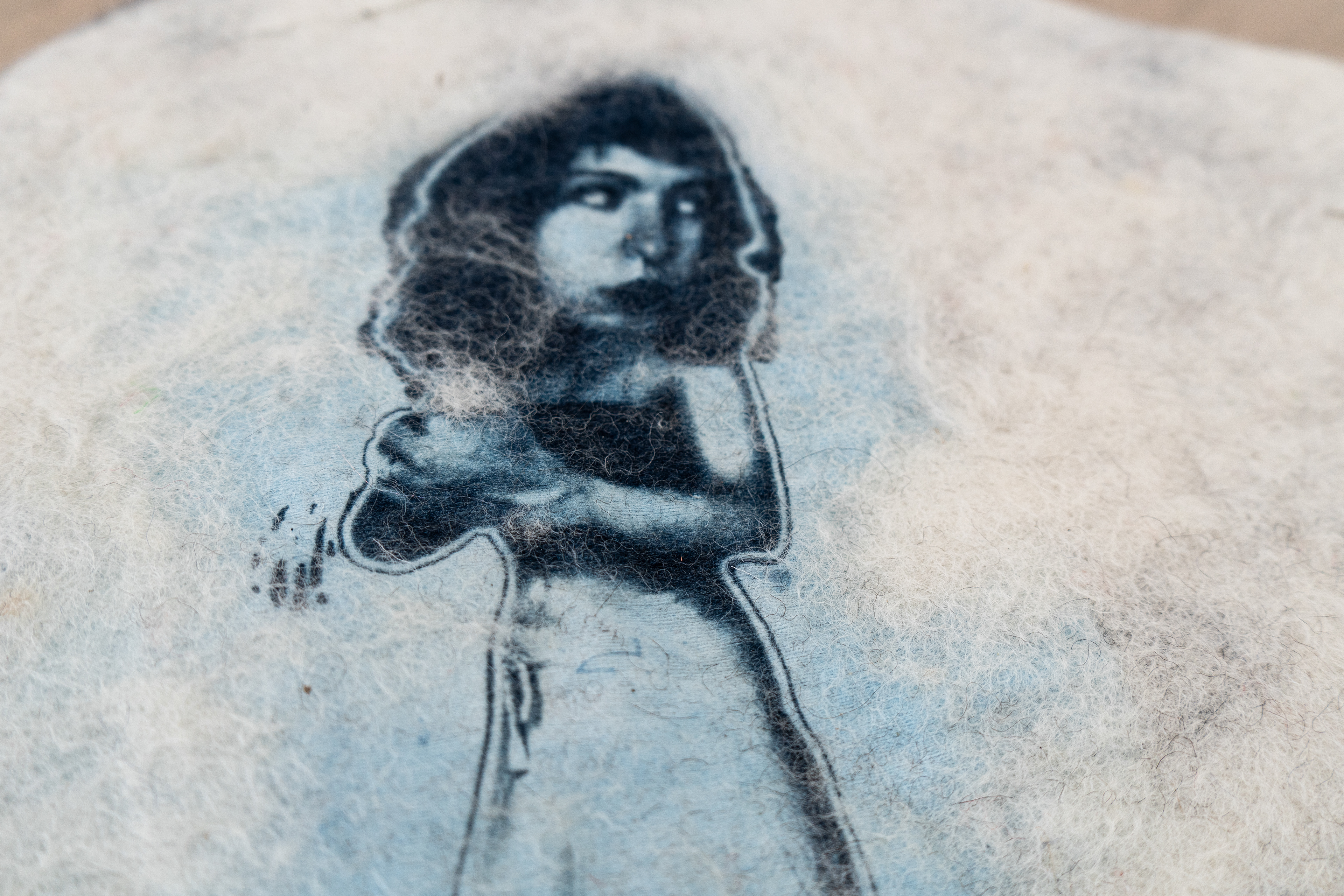
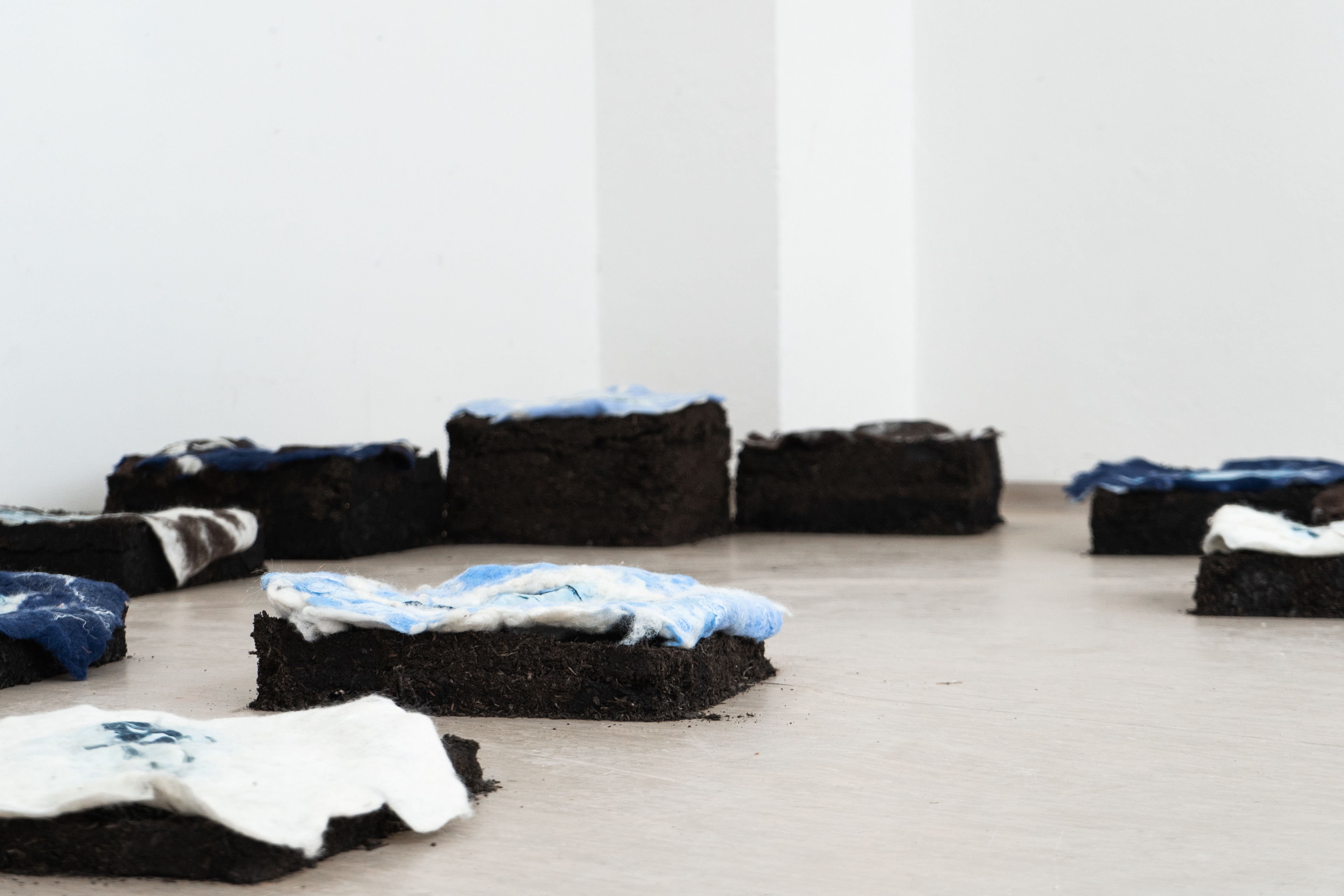
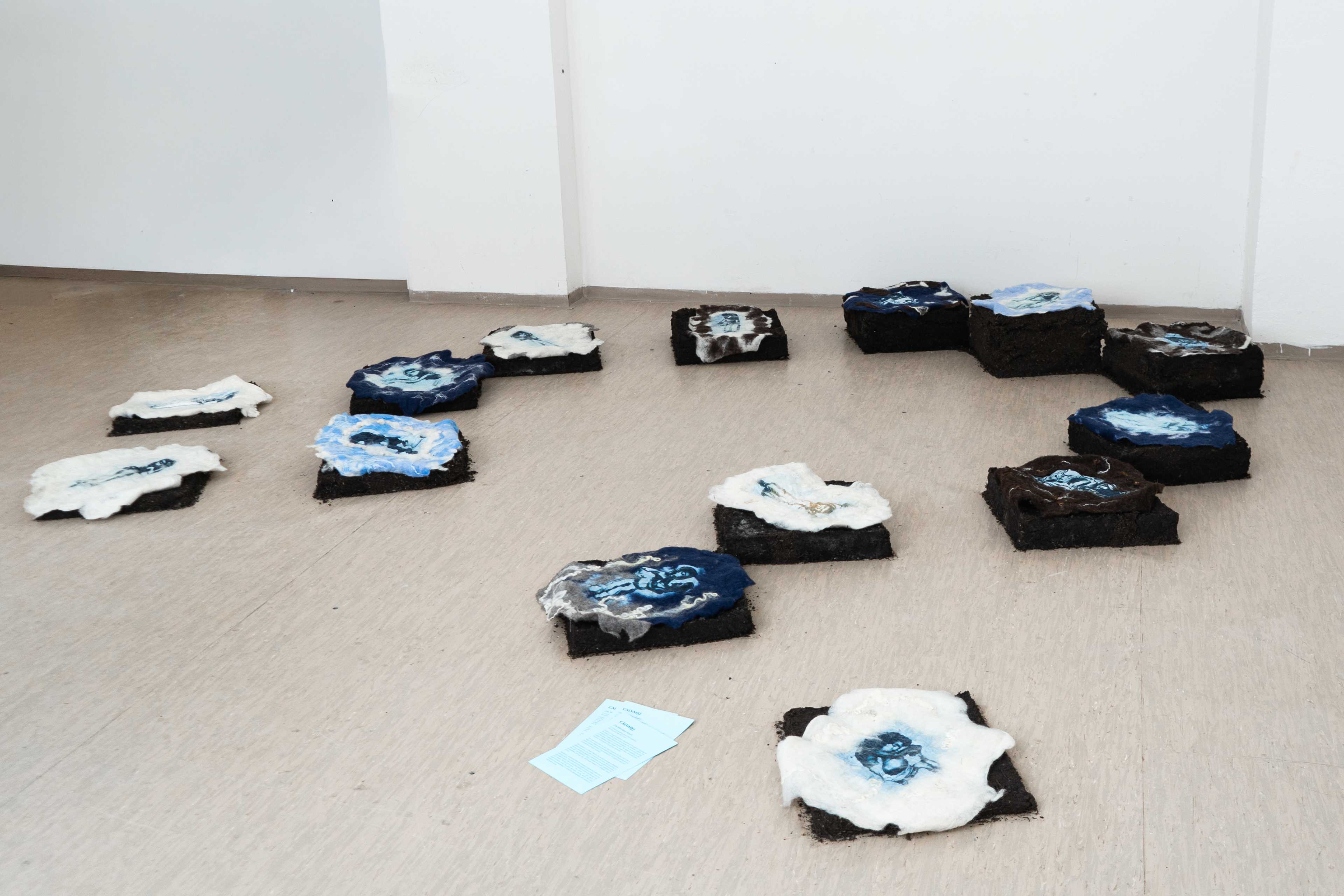
Calvary is a 14-part installation that draws on the gestural language of the
Stations of the Cross. In these works, the characters, objects, and narratives
of classic biblical scenes disappear—the focus remains solely on the body,
movements, and gestures. The figure appearing in the images is Matulányi-
Szabó herself, who evokes these canonized poses and forms of movement
through her own body.
The work stems from the idea that “everyone has their own cross to bear”:
from the personal and collective experience of repeatedly facing various
burdens, decisions, and uncertainties. The gestures carry both universal and
intimate meanings
The installation is closely linked to the issues preoccupying Matulányi-
Szabó’s generation: the lack of a vision for the future, the uncertainty of
starting a family, the fragility of relationships, and anxieties surrounding
work and self-realization. These personal and social problems are
reinterpreted through the well-known imagery of Christian visual culture.
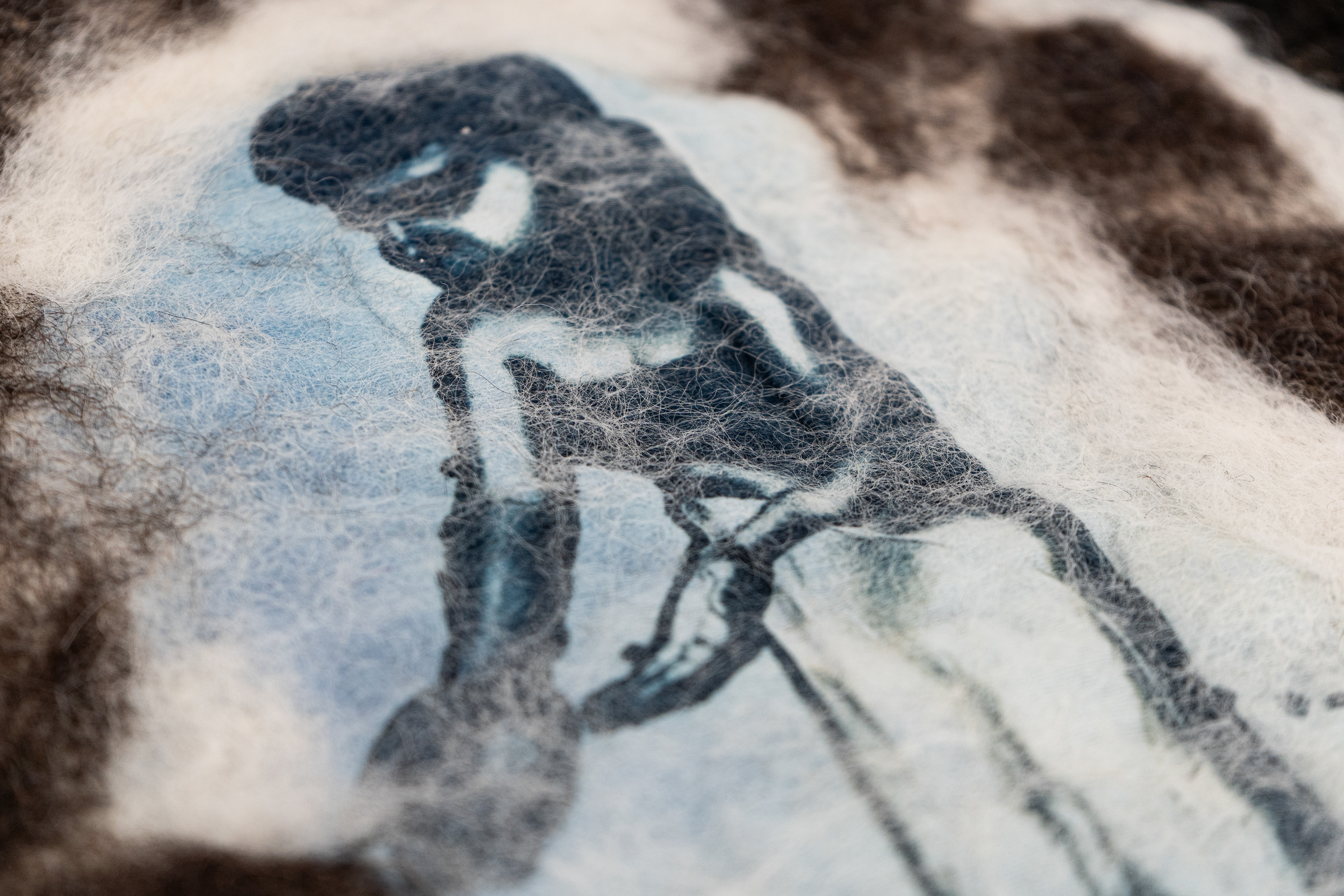
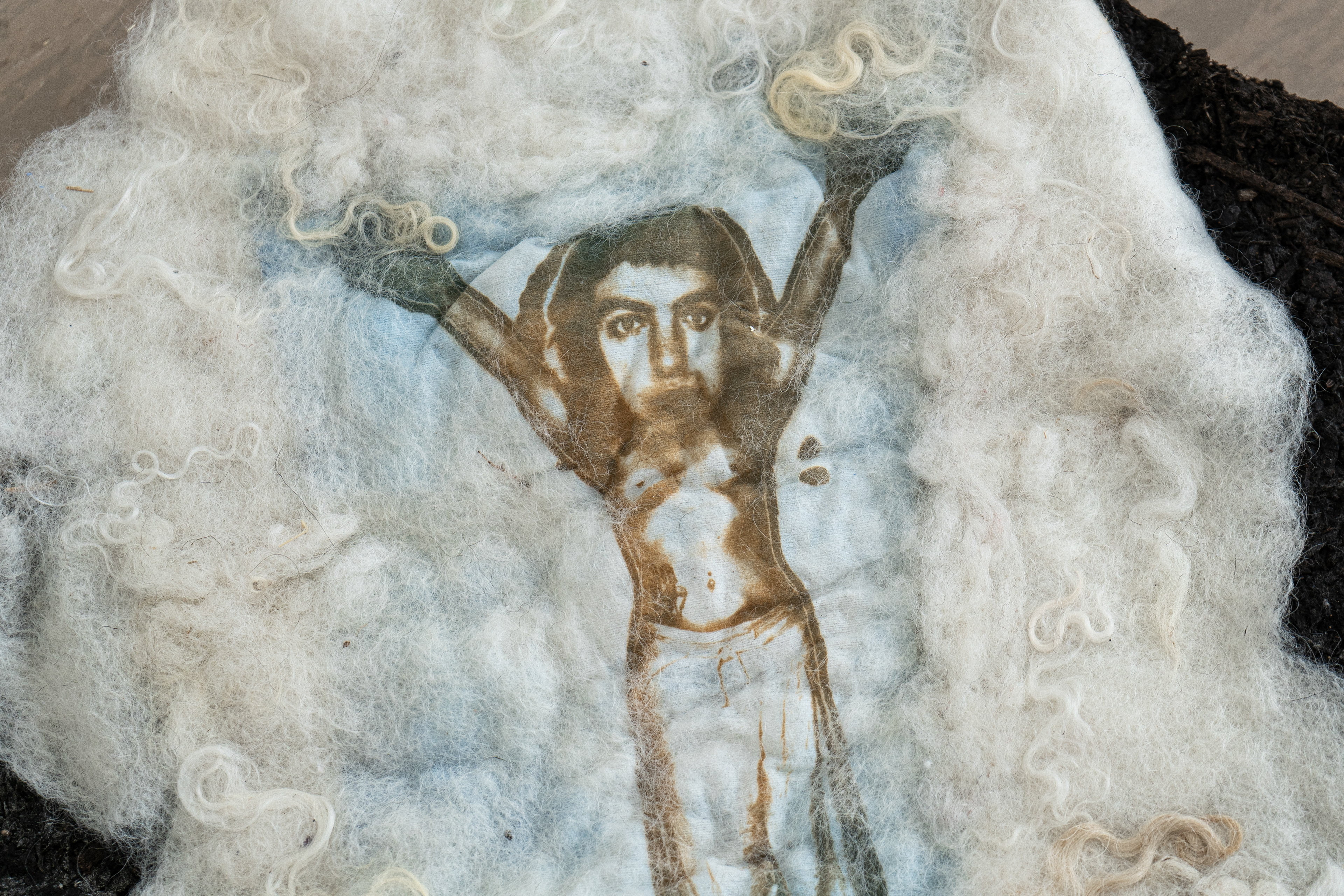
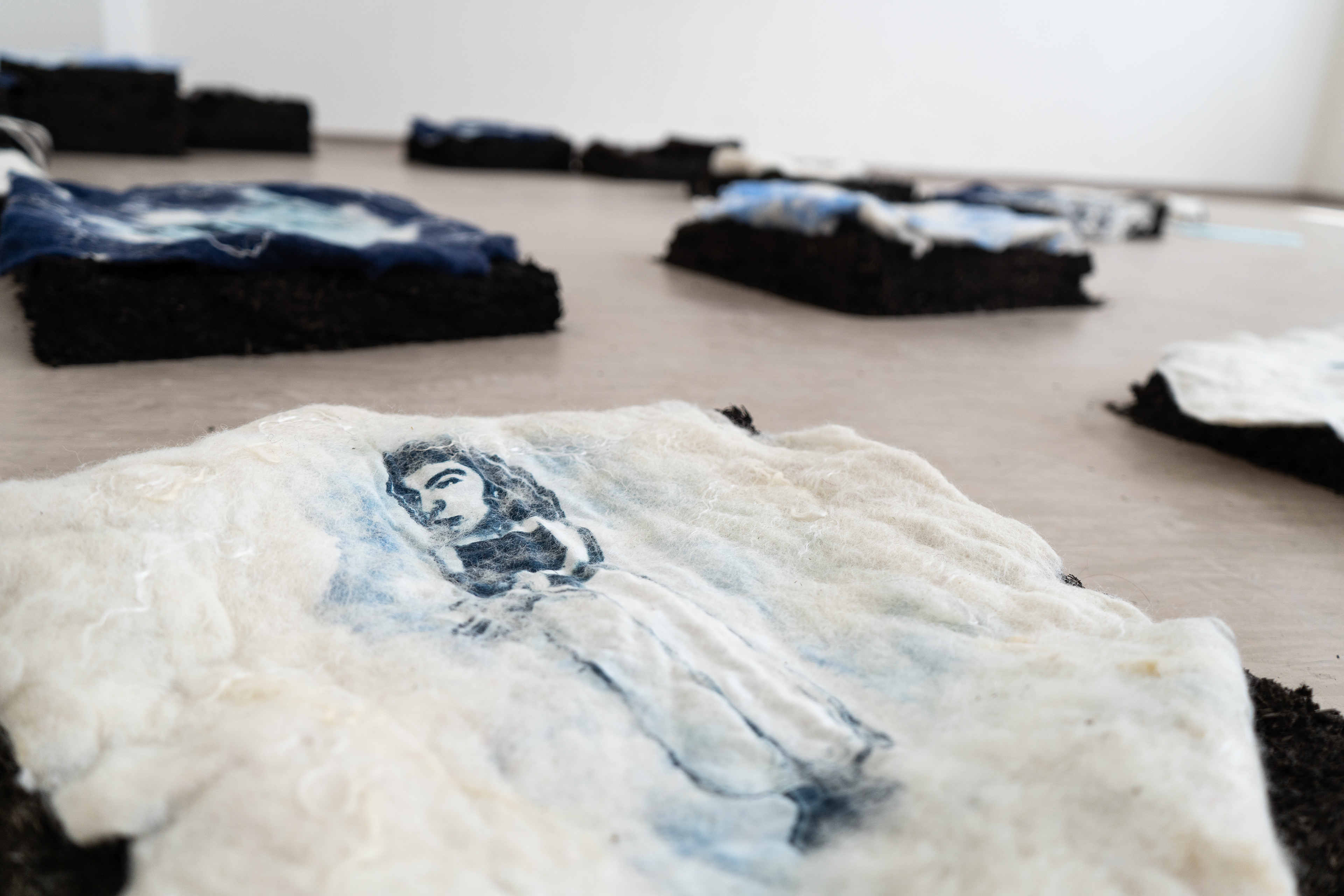
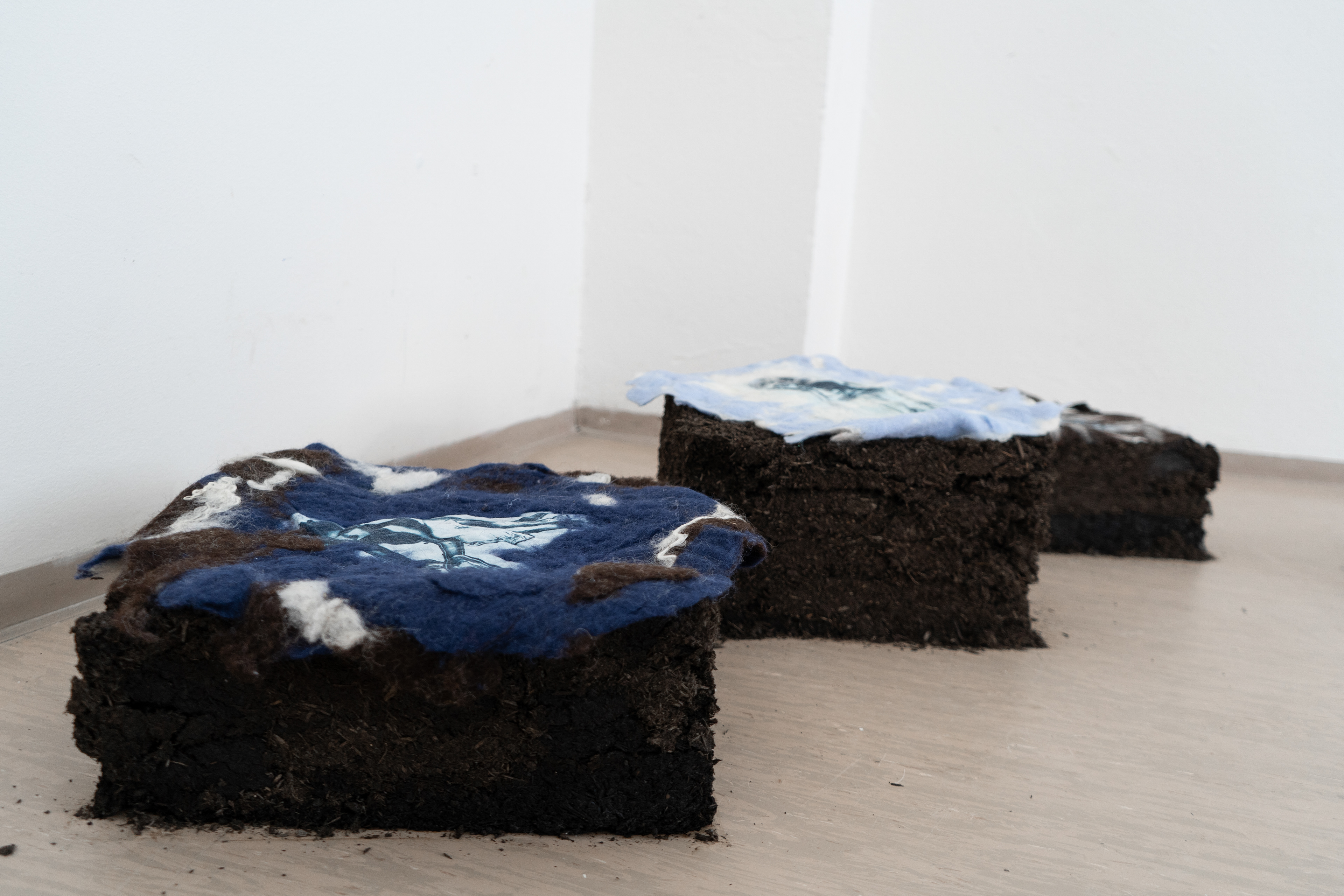
The series is constructed from the interplay of layers that differ even in
technical terms. The works are photo-based textiles created using the
cyanotype process, which have been further transformed through wet and
needle felting techniques. The works are the result of experimentation over
the past semester, during which the artist explored the possibilities of
combining photography with traditional textile techniques.
Stations of the Cross. In these works, the characters, objects, and narratives
of classic biblical scenes disappear—the focus remains solely on the body,
movements, and gestures. The figure appearing in the images is Matulányi-
Szabó herself, who evokes these canonized poses and forms of movement
through her own body.
The work stems from the idea that “everyone has their own cross to bear”:
from the personal and collective experience of repeatedly facing various
burdens, decisions, and uncertainties. The gestures carry both universal and
intimate meanings
The installation is closely linked to the issues preoccupying Matulányi-
Szabó’s generation: the lack of a vision for the future, the uncertainty of
starting a family, the fragility of relationships, and anxieties surrounding
work and self-realization. These personal and social problems are
reinterpreted through the well-known imagery of Christian visual culture.
The series is constructed from the interplay of layers that differ even in
technical terms. The works are photo-based textiles created using the
cyanotype process, which have been further transformed through wet and
needle felting techniques. The works are the result of experimentation over
the past semester, during which the artist explored the possibilities of
combining photography with traditional textile techniques.